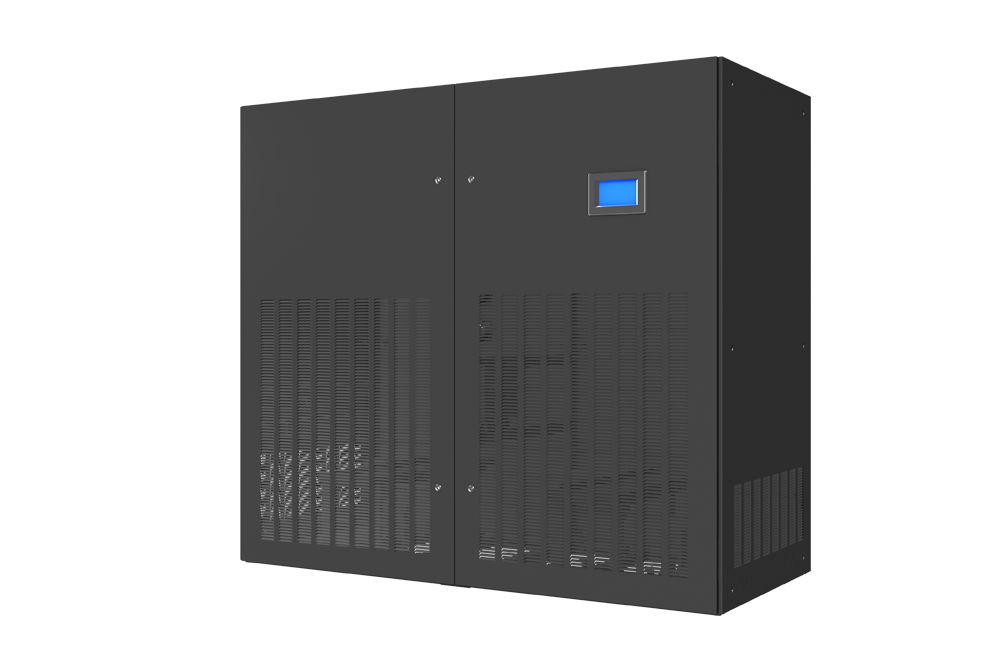
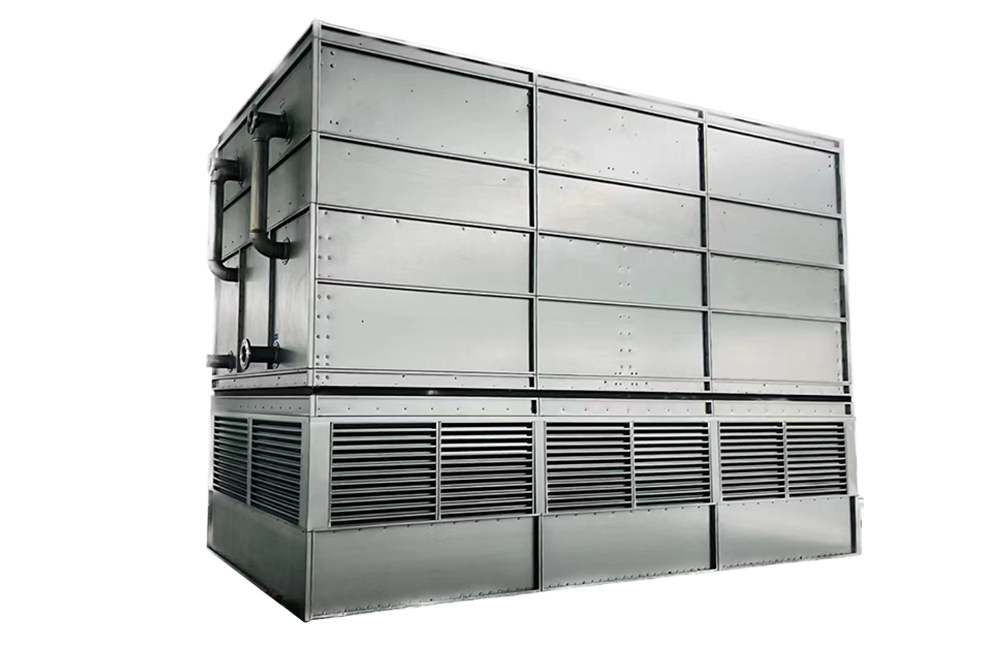
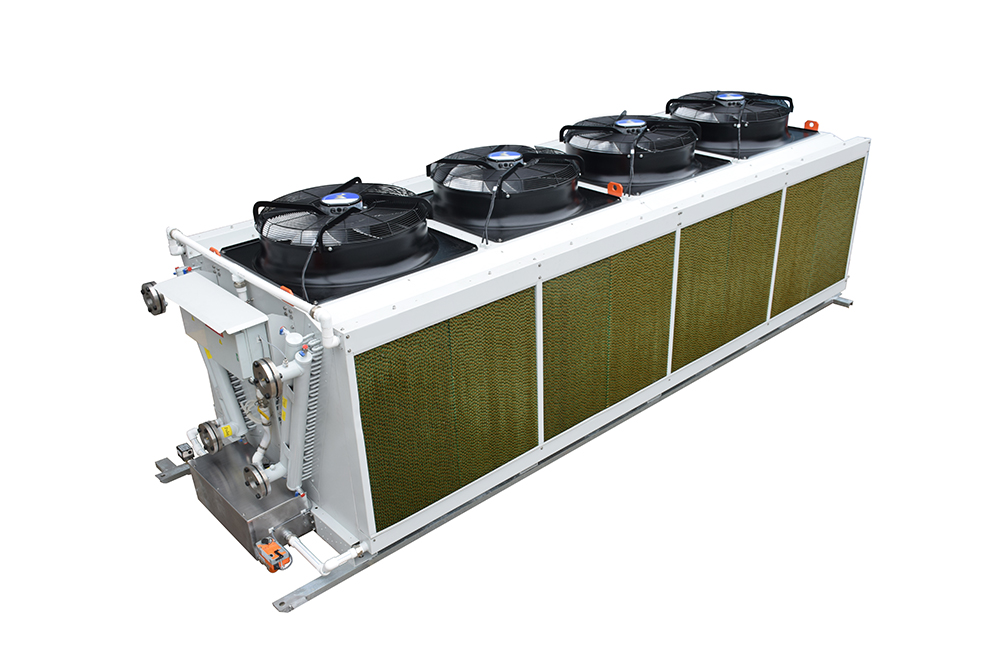
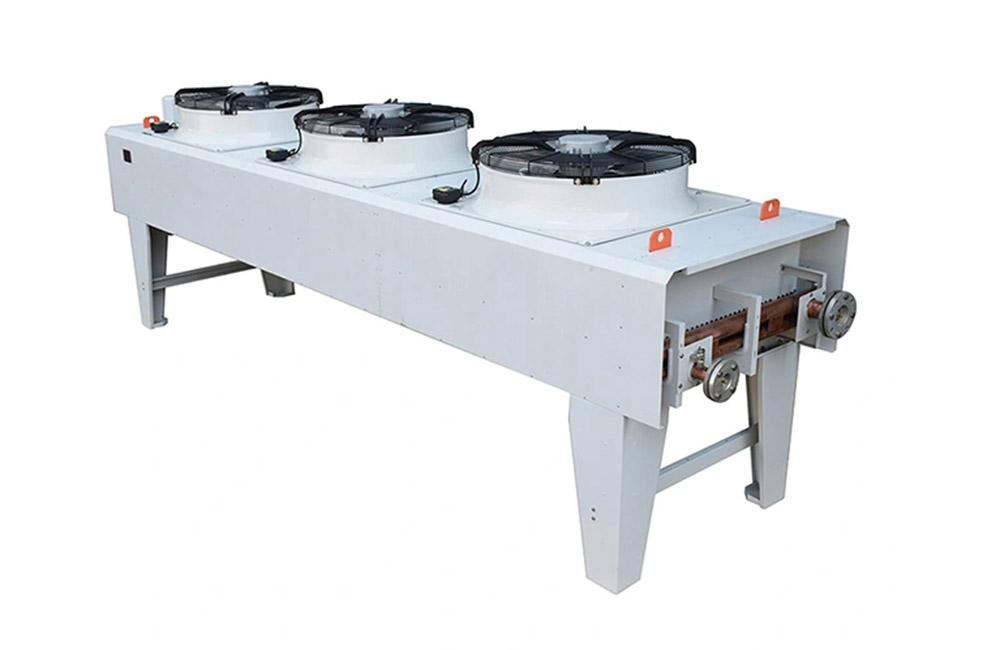
The vertical dry cooling system is cooled by the air outside the factory building, and the door-mounted condenser replaces the cloth. Conventional water-cooled condensers below the steam turbine are typically supplied with blast air for condensing and exhausting steam.
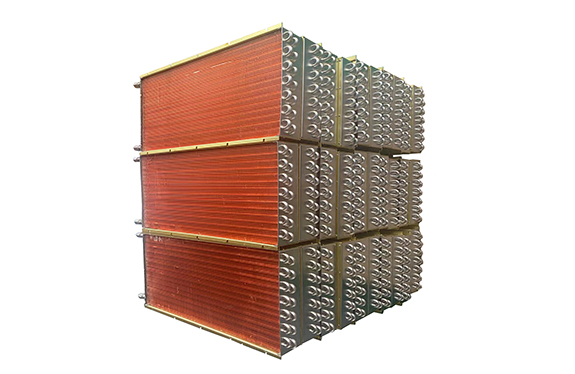
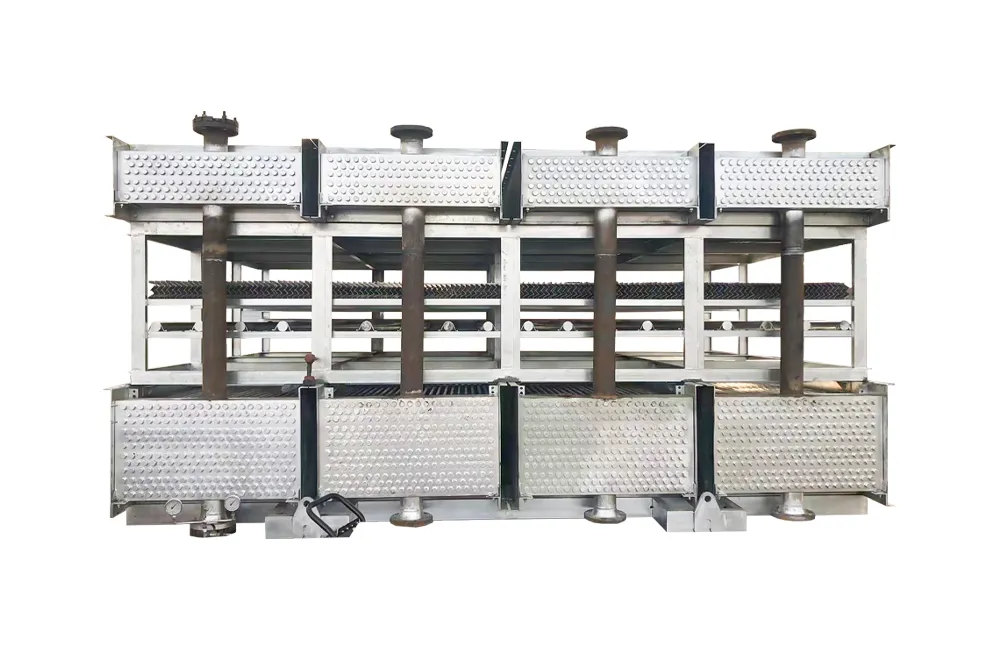
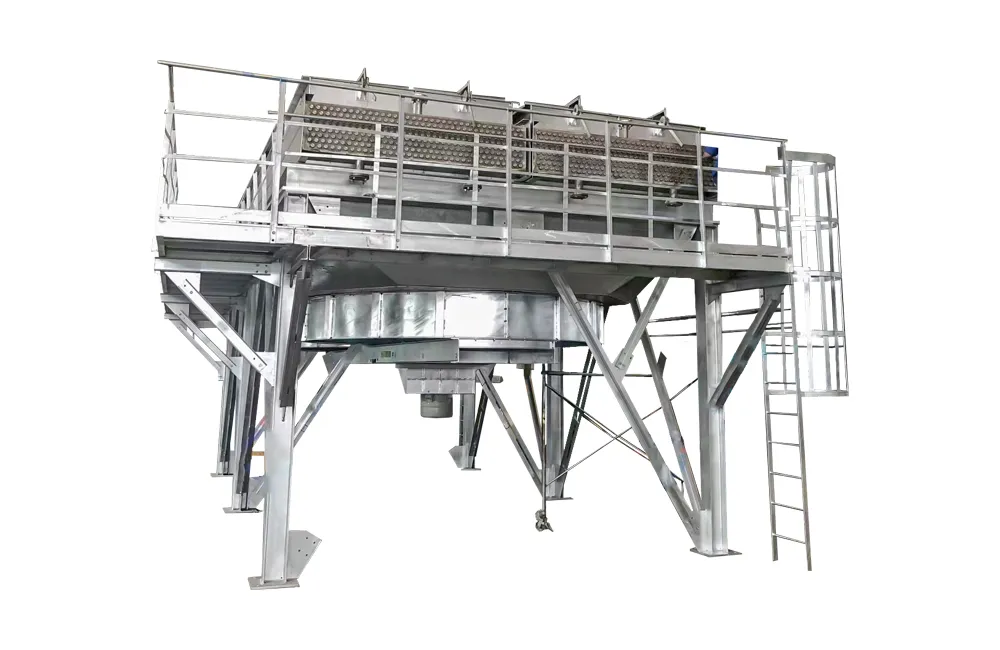
The condenser is composed of many finned tube bundles, and the large air-cooled condenser and fan cloth are 20~45m above the steam turbine, which does not affect the layout of the transformer and outlets. The advantage of this system is that there is only one condensing steam cooling device, and the airflow rate through the finned tube bundle can be relatively large, so that the number of tube bundles can be reduced, and the antifreeze performance of the system is reliable.
However, this kind of system needs to use the exhaust pipe to lead the exhaust steam to the condenser outside the factory building under vacuum conditions. The air is easy to burn people, and the shape is large, and the fan consumes a lot of power, accounting for about 2.5%~3.0% of the output of the steam turbine.
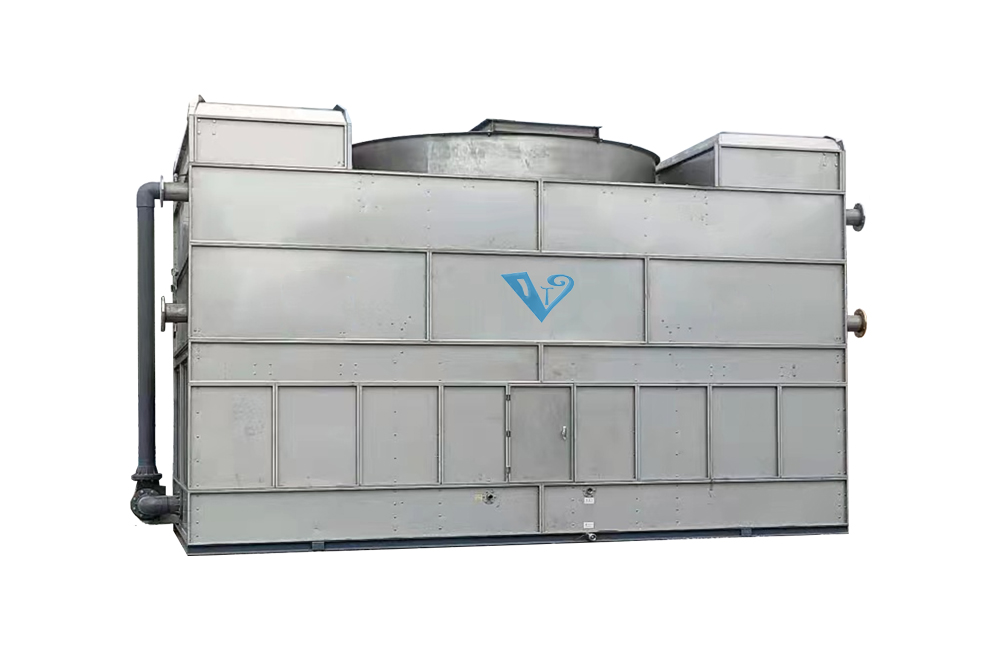
The heated cooling water is sent to the airtight cooler around the outside of the air inlet of the natural draft cooling tower or inside the tower. After being cooled, it flows back to the condenser for reuse. According to different types of condensers, the system can be divided into dry cooling systems with stick-type condensers and surface condensers. Indirect dry cooling system with hybrid condenser The cooled water is sprayed into a thin water film through nozzles in the hybrid condenser, and the exhaust steam is mixed with the water film to condense. Most of the heated cooling water is sent to the cooling tower with a water pump, and a small part is still returned to the main condensate system as condensed water. The advantage of this system is that the structure of the hybrid condenser is simple and the cost is low. The output of the condenser and the exhaust steam theoretically have no temperature difference and have high thermal efficiency.
However, it also has the disadvantage of relatively complex systems and equipment. The main reason is that the water pump needs to absorb water in the high-vacuum condenser hot well, and the water pump requirement is equal to that of the condensate pump. Cooling water and condensate are combined to take into account lower blocking back pressure during longer cold seasons and to enable year-round weighted average steam turbine thermal efficiency. The cold end parameters of the steam turbine are generally optimized together with the cooling system size and matching boiler capacity. The critical water cost dry cooling system saves about 80% of the water consumption compared with the wet cooling system, and the water saving per unit of electricity is about 2.0kg/(kW·h). According to the difference in back pressure and exhaust area, the heat consumption of a dry-cooled steam turbine is 5%~8% higher than that of a wet-cooled steam turbine.



.jpg)
.jpg)
65.webp)
265.webp)