The rapid growth of AI, HPC, and cloud services is increasing demand for data center infrastructure that can accommodate higher computing densities while simplifying deployment. Container data centers offer a modular approach by integrating IT equipment, cooling systems, power distribution, and supporting infrastructure within a prefabricated enclosure. VENTTK provides integrated data center solutions designed to address the evolving requirements of modern computing environments.
A container data center is a prefabricated, enclosed facility that houses servers, networking equipment, power systems, cooling equipment, and other essential infrastructure. Unlike conventional data centers that require extensive on-site construction, containerized solutions allow multiple infrastructure components to be designed, assembled, and tested before installation at the project site.
Depending on the application, a container data center can be configured for enterprise computing, edge computing, telecommunications, cloud services, or high-density AI workloads. Its modular structure also supports phased deployment, allowing infrastructure capacity to expand in line with changing business requirements.
Key Components of a High-Density Container Data Center
1. Modular Container Enclosure
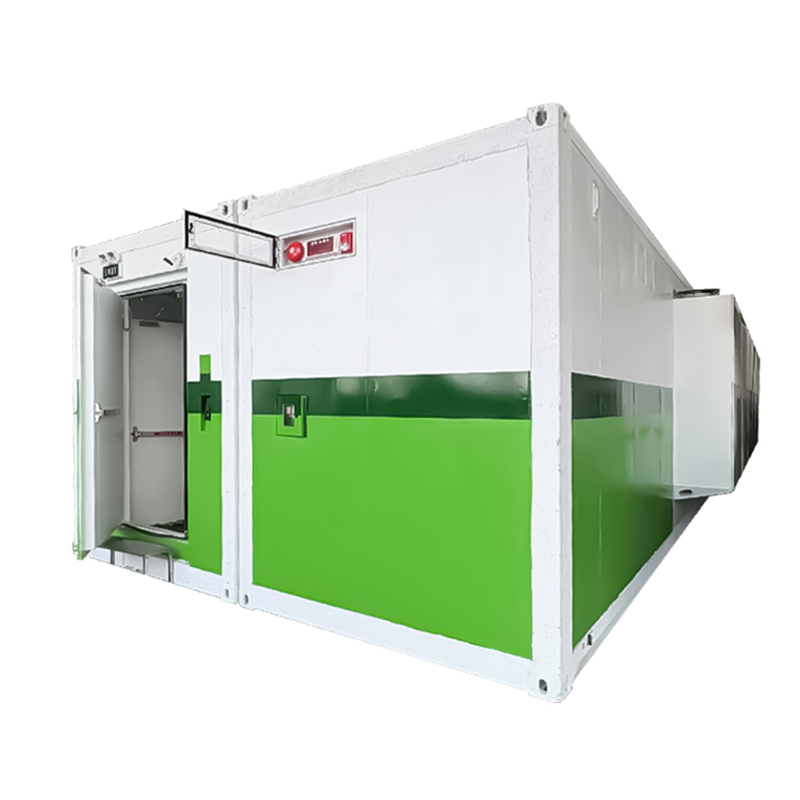
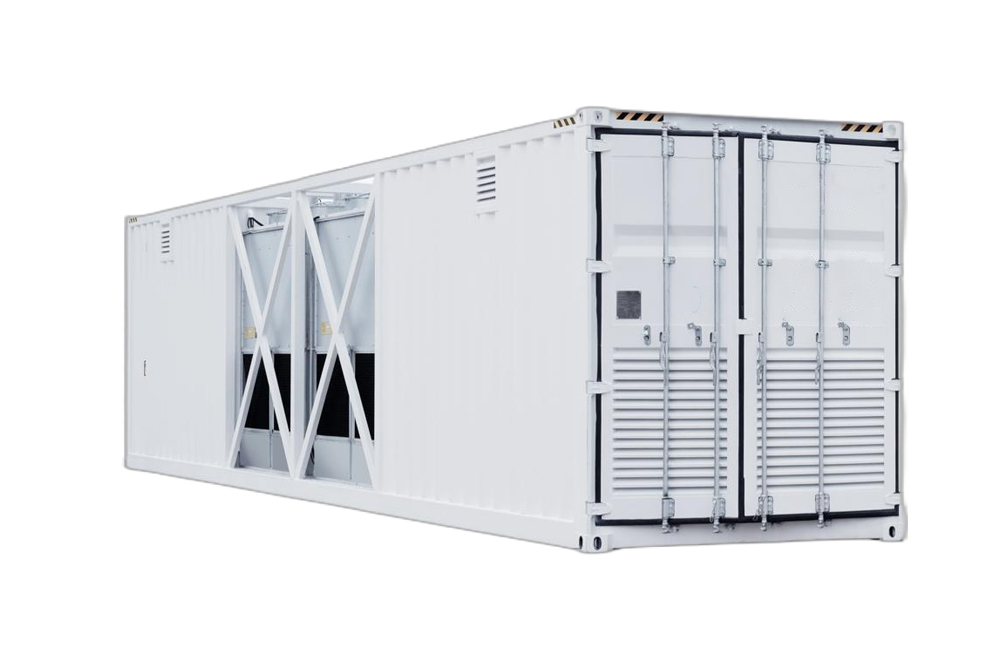
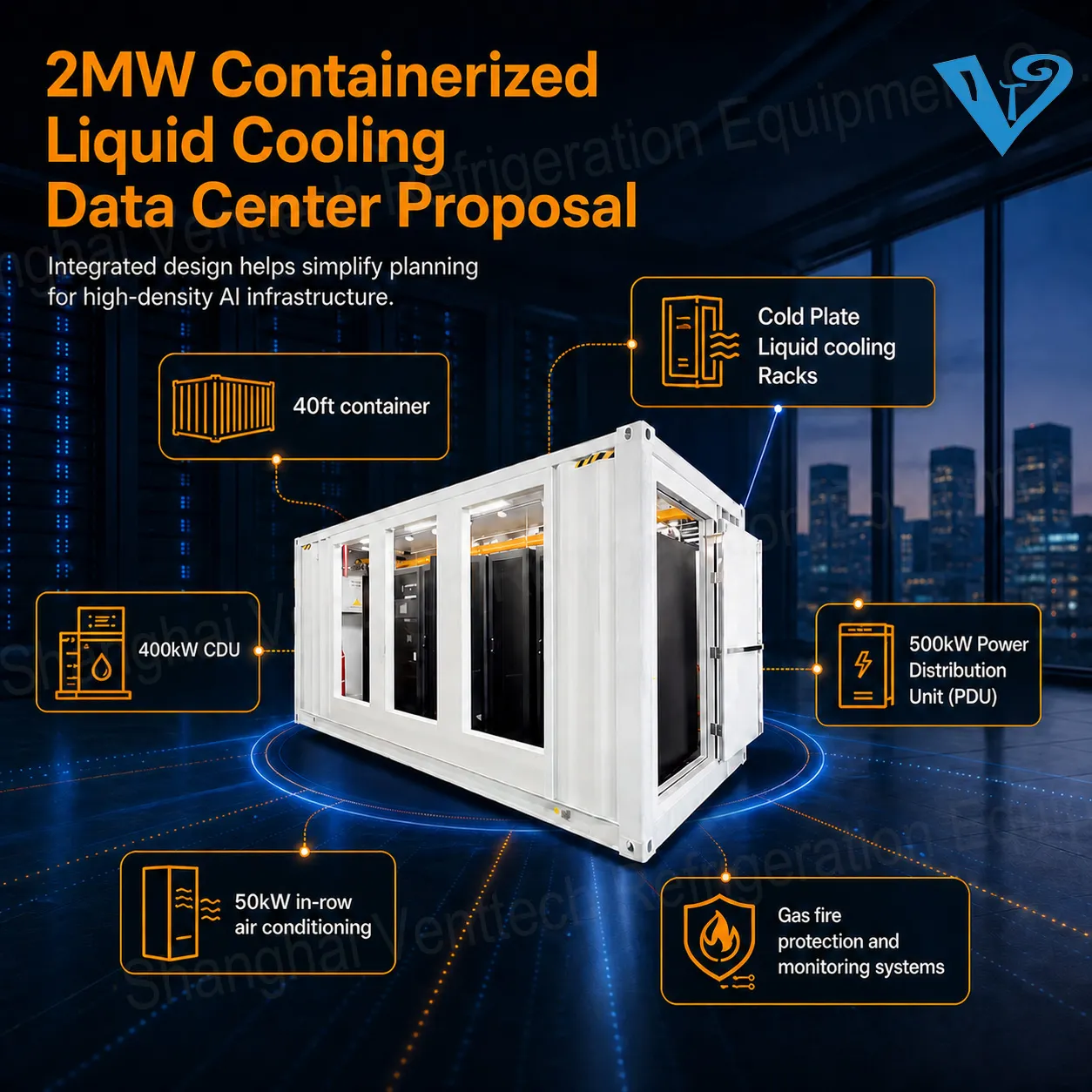
A 40-foot container can provide a dedicated enclosure for IT equipment and supporting systems. Its internal layout can be customized according to rack quantities, maintenance access, cooling requirements, and power distribution arrangements. Prefabrication helps coordinate equipment integration before transportation and installation, reducing the complexity of on-site assembly.
2. Liquid Cooling for High-Density Computing
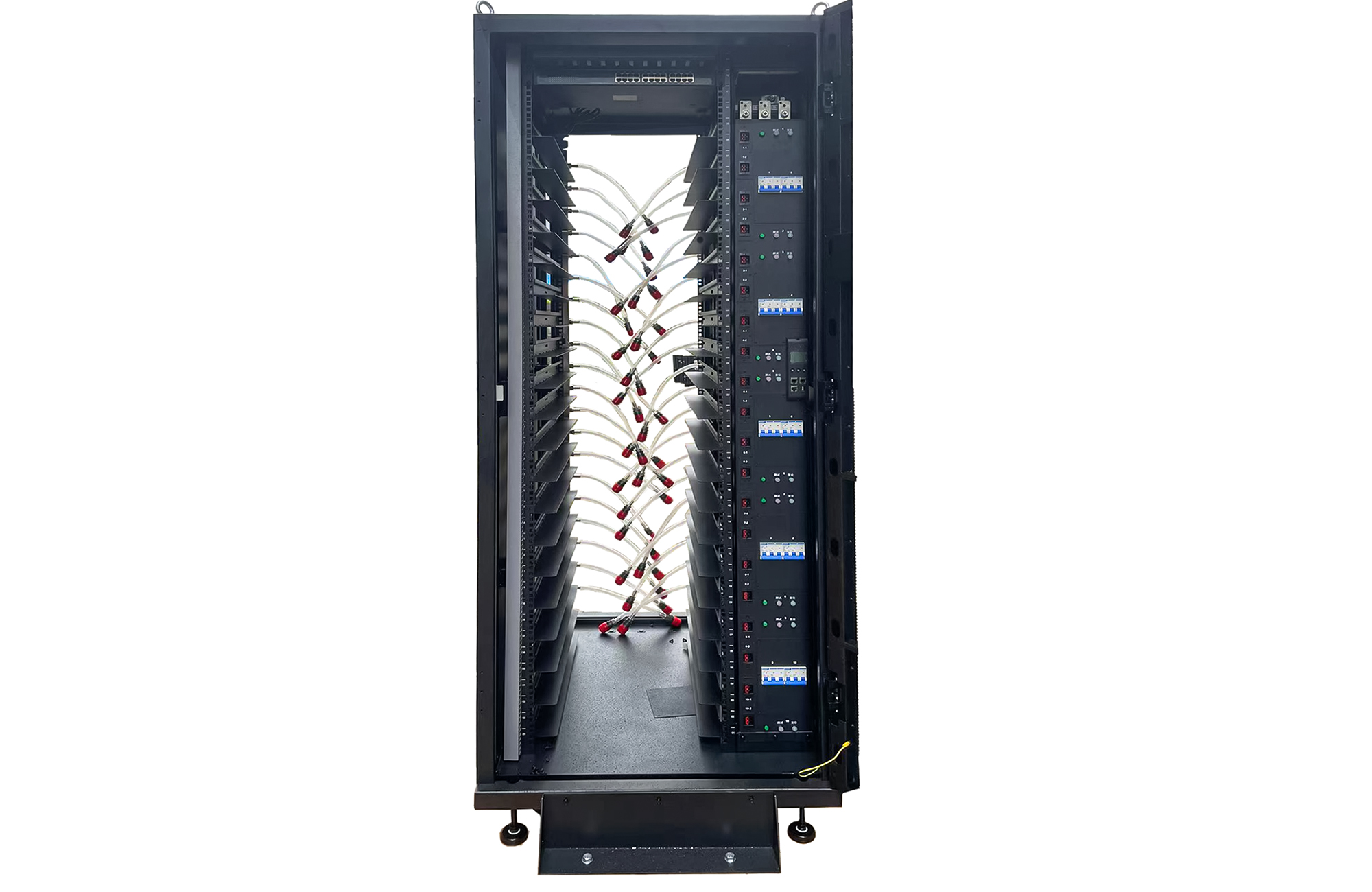
AI servers and GPU clusters can generate substantial heat, making thermal management a critical part of data center design. Cold-plate liquid cooling transfers heat directly from selected high-temperature components into a circulating liquid loop, reducing the burden on room-level air cooling.
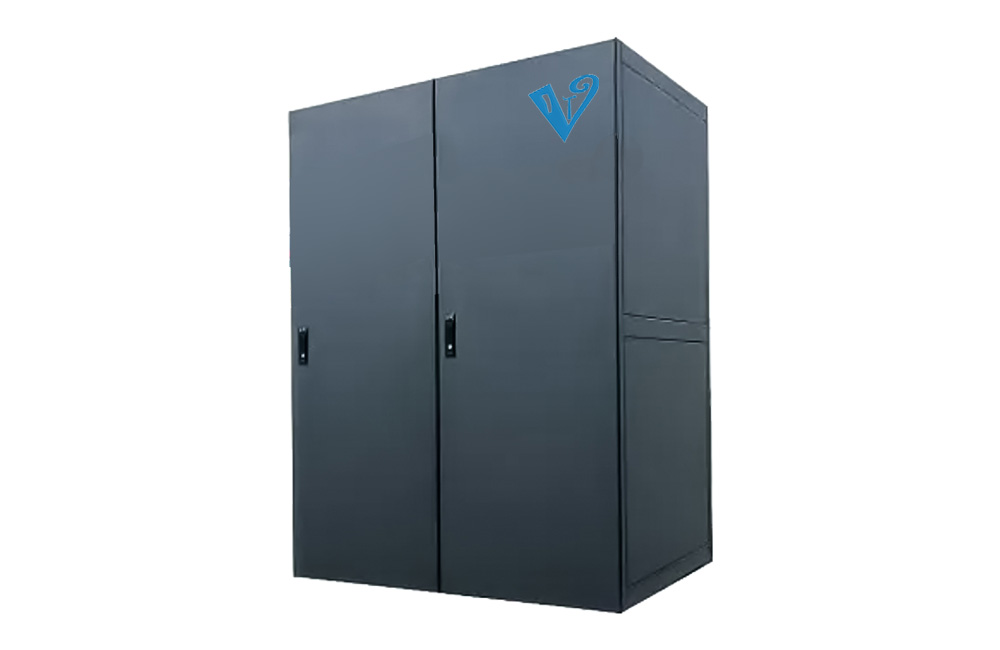
A coolant distribution unit (CDU) manages the circulation and heat exchange between the facility-side cooling loop and the IT-side liquid cooling loop. In the illustrated concept, a 400 kW CDU is paired with cold-plate liquid-cooling racks. The appropriate configuration depends on server heat loads, coolant conditions, flow requirements, and system redundancy.
3. Air Cooling and Thermal Management
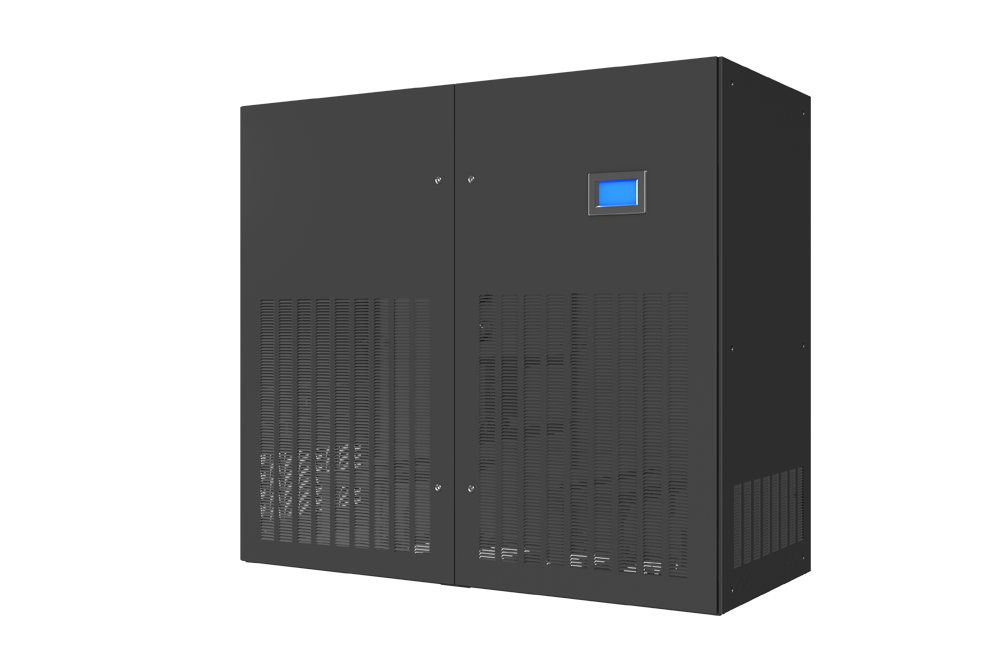
Liquid cooling does not necessarily eliminate the need for air conditioning. Power supplies, networking equipment, storage devices, and other components may still require air-based heat removal. In-row air conditioning can deliver localized cooling close to server racks, helping manage residual heat and maintain suitable operating conditions.
The balance between liquid and air cooling should be determined by the IT equipment configuration and the overall thermal design. Combining these approaches can provide greater flexibility when supporting mixed workloads.
4. Power Distribution and Protection
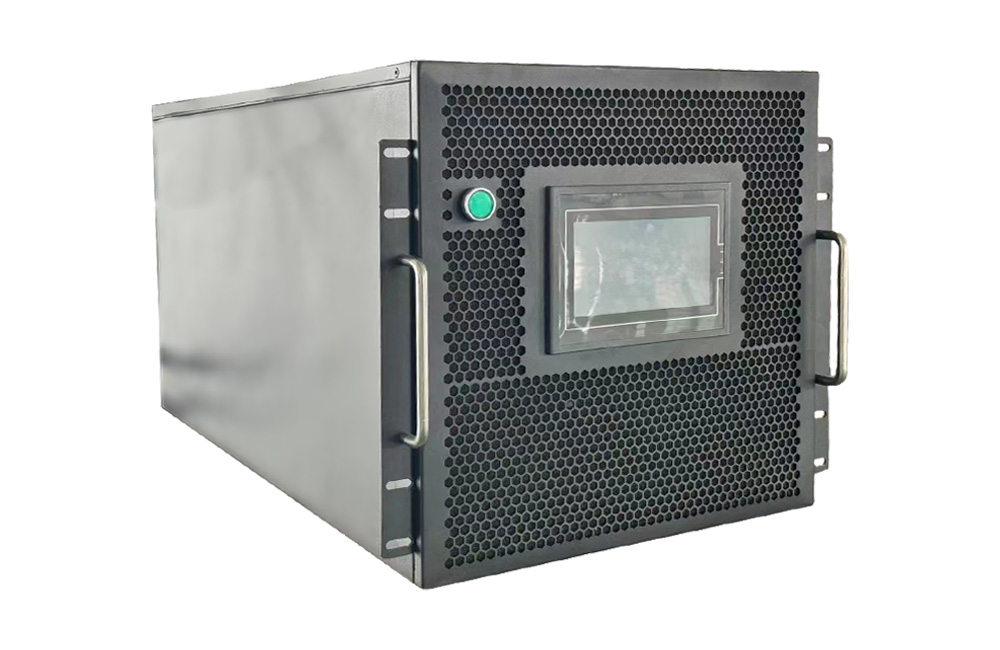
Reliable power delivery is essential for continuous data center operation. A power distribution unit (PDU) distributes electrical power to designated loads and can support monitoring and management functions depending on its configuration.
5. Fire Protection and Monitoring
Containerized infrastructure requires coordinated fire detection, suppression, and environmental monitoring. Depending on applicable regulations and project specifications, a solution may incorporate gas-based fire suppression, detection devices, alarms, and centralized monitoring. These systems should be selected and engineered to suit the enclosure, installed equipment, and local safety requirements.
Why Choose a Container Data Center?
Container data centers offer several practical advantages:
1.Faster deployment: Prefabricated integration can reduce the amount of construction required at the installation site.
2.Modular scalability: Additional capacity can be introduced through a planned modular expansion strategy.
3.Integrated system design: IT equipment, cooling, power distribution, and safety systems can be coordinated as a unified infrastructure solution.
4.Flexible application: Configurations can be tailored to AI computing, edge facilities, telecommunications, and other specialized environments.
5.Improved project coordination: Factory integration and testing can help identify interface issues before equipment reaches the site.
VENTTK: Integrated Infrastructure for Evolving Computing Needs
A high-performance container data center requires more than a container and a set of servers. Cooling capacity, power availability, equipment layout, operational safety, and future expansion must be considered together from the beginning of the design process.
VENTTK supports project-specific data center planning through integrated infrastructure configurations tailored to application requirements. Whether a project calls for conventional air cooling, liquid cooling for high-density computing, or a combination of both, equipment selection and system integration should be guided by the actual workload, operating conditions, and reliability targets.
By adopting a coordinated modular approach, businesses can develop data center infrastructure that is easier to deploy, manage, and expand as computing demands continue to grow.